Library Person
Stafford Beer
British theorist who founded management cybernetics and designed Chile's Project Cybersyn.
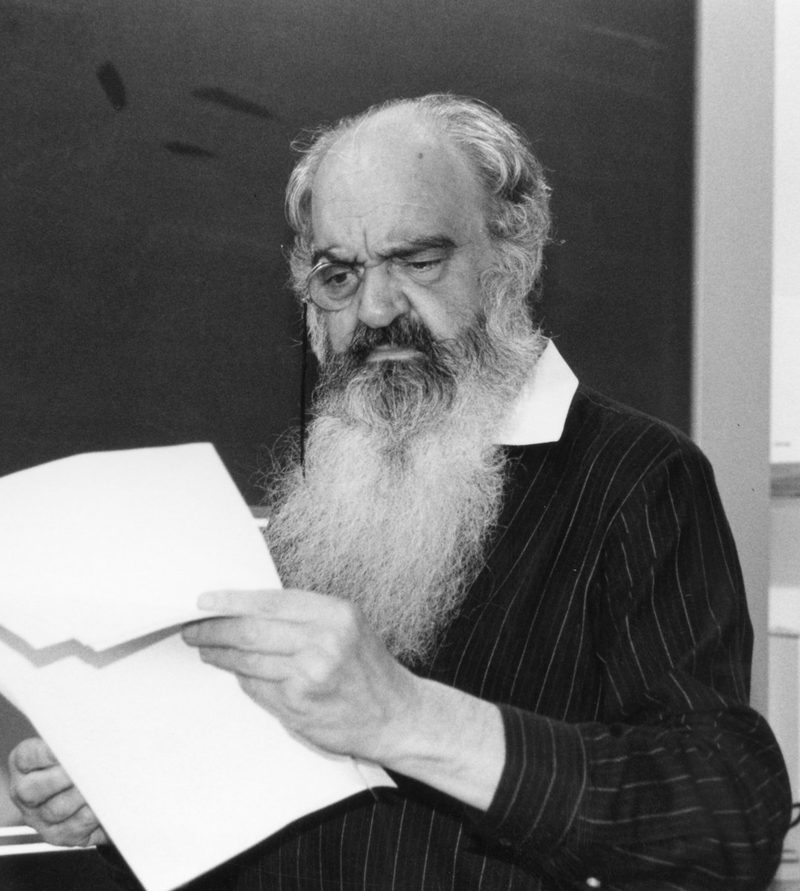
Stafford Beer (1926–2002) founded management cybernetics, applying Norbert Wiener’s cybernetics to the “science of effective organization” — first in Cybernetics and Management (1959), then across three decades of work culminating in the Viable System Model. After reading Wiener’s Cybernetics, Beer wrote to him directly; the two corresponded and became close, with Wiener reportedly telling Beer that if he was the father of cybernetics, Beer was the father of management cybernetics. Beer and Gordon Pask collaborated from as early as 1958, when they built an experimental electrochemical “learning” system — suspended electrodes in a ferrous solution — in Pask’s London flat; the two remained connected through British cybernetics circles for decades, Pask later contributing the operations-room instrumentation for Beer’s Project Cybersyn. In 1971–73 Beer led Cybersyn for Salvador Allende’s government, a real-time cybernetic system for managing the Chilean economy, ended by the 1973 coup. His 1973 CBC Massey Lectures, published as Designing Freedom, were delivered shortly after his return from Chile.
Works in the Library
Stafford Beer BOOK 1959
Stafford Beer's 1959 book founding management cybernetics, the application of cybernetic principles to organizations.
CYBERNETICS TECHNOLOGY
Stafford Beer LECTURE 1974
Beer's CBC Massey Lectures analyze why institutions fail through the lens of cybernetics — and how the science of effective organization could be used to redesign them.
CYBERNETICS DYNAMICAL SYSTEMS TECHNOLOGY
Stafford Beer, Gordon Pask SYSTEM 1971
Stafford Beer's real-time cybernetic system for managing the Chilean economy, built for Salvador Allende's government, 1971–73.
CYBERNETICS COMPUTATION TECHNOLOGY