Laurie Spiegel
American composer and pioneer of computer music and algorithmic composition.
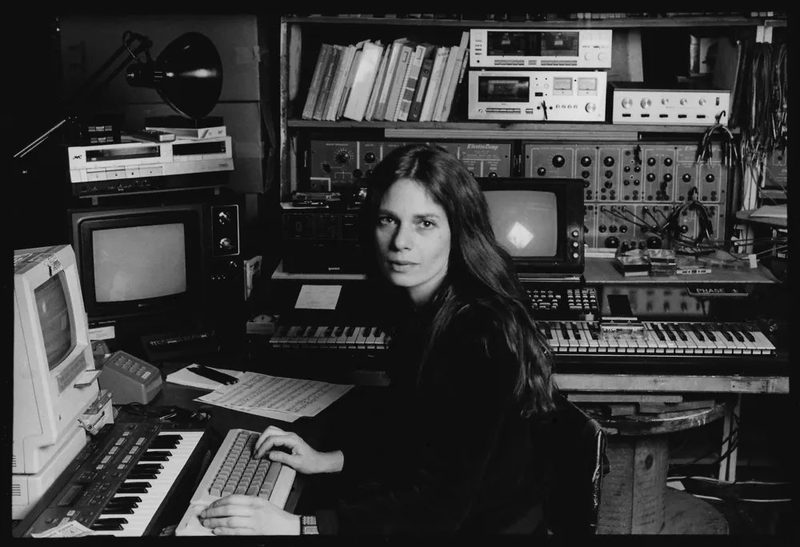
Laurie Spiegel (b. 1945, Chicago) taught herself mandolin, guitar, and banjo as a child before earning a sociology degree from Shimer College in 1967 and studying composition at Juilliard from 1969 to 1972 under Jacob Druckman, Vincent Persichetti, and Hall Overton. From 1973 to 1978 she worked at Bell Labs with the GROOVE system, one of the earliest interactive digital-synthesis platforms, and later used the Bell Labs Digital Synthesizer for algorithmic composition. Her 1980 album The Expanding Universe documents that period; her realization of Kepler’s Harmonices Mundi was included on the Voyager Golden Record the same year. In 1986 she released Music Mouse, a widely used “intelligent instrument” program for Macintosh, Amiga, and Atari computers that let a player improvise algorithmically generated counterpoint from the keyboard or mouse.
Works in the Library
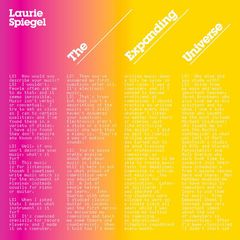
Laurie Spiegel ALBUM 1980
Laurie Spiegel's landmark of algorithmic composition made on the GROOVE system at Bell Labs.
TIME FORM COMPUTATION