Library SARC Research Person
Jorge Luis Borges
Argentine writer of labyrinthine short fictions on infinity, time, memory, and language.
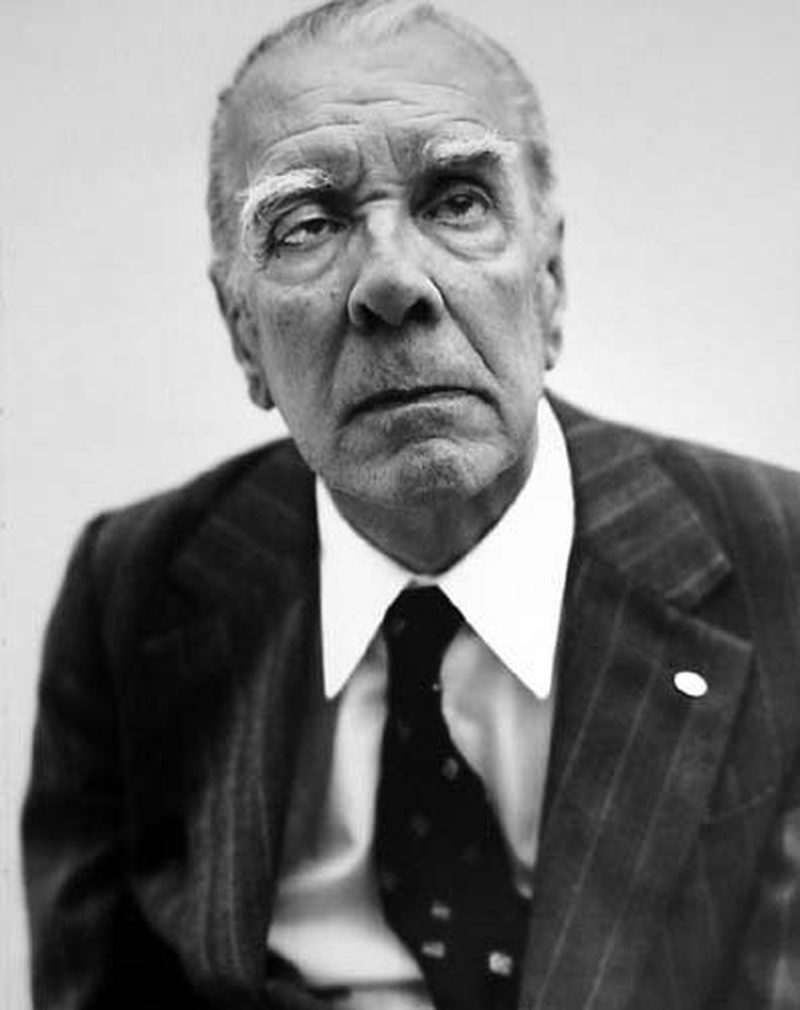
Jorge Luis Borges (1899–1986) worked from 1938 as first assistant at the Miguel Cané Municipal Library in Buenos Aires, cataloging some hundred books a day, and by 1955 — the year his eyesight failed completely — had been appointed director of Argentina’s National Library. His two major collections, Ficciones (1944) and El Aleph (1949), gathered short fictions built on infinite libraries, forking labyrinths, and worlds that overwrite reality through language alone: The Library of Babel imagines the universe as a total archive of every possible book of fixed length, and Tlön, Uqbar, Orbis Tertius traces an invented encyclopedia’s slow takeover of the real world. Shared recognition of the 1961 Prix Formentor, awarded jointly with Samuel Beckett, brought him international attention and helped establish the Latin American Boom.
Works in the Library
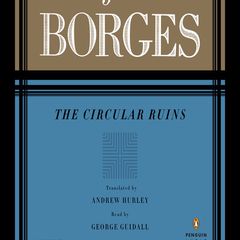
Jorge Luis Borges STORY 1940
A magician sets out to dream a man into being, then discovers that he too is another's dream.
FORM MORPHOGENESIS
Jorge Luis Borges STORY 1941
The universe imagined as a total library containing every possible book of a fixed length.
NUMBER LANGUAGE SPACE
Jorge Luis Borges STORY 1941
A society governed ever more totally by an infinite lottery, until chance administers every event.
NUMBER FORM
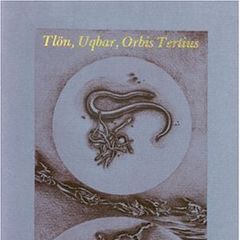
Jorge Luis Borges STORY 1940
The encyclopedia of an invented world slowly begins to overwrite reality itself.
LANGUAGE FORM MEMORY